
Suggested Guidelines
For the treatment of OSA
Current Concepts in Evaluation and Surgical Planning - The Pang-Woodson Protocol
By Dr Kenny P. Pang | Dr Brian Rotenberg | Prof Tucker Woodson
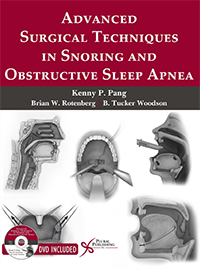
Excerpt taken from the textbook “Advanced Surgical Treatment of Snoring and Obstructive Sleep Apnea”By Plural Publishing.
Introduction
Snoring is noisy breathing during sleep, has been historically believed to be a social “nuisance” and one of the most obnoxious human habits. Snoring is caused by the vibration of the structures in the oral cavity - the soft palate, uvula, tonsils, base of tongue, epiglottis and pharyngeal walls. The presence of snoring is believed to be a loud “alarm” to alert one to the possibility of a sleep disorder. This sleep disorder can range from simple snoring, to upper airway resistance syndrome and obstructive sleep apnea (OSA). This spectrum of disorders has been termed Sleep Disordered Breathing (SDB).
This spectrum of diseases is related to reduced airflow through the upper airway during sleep, due either to complete or partial upper airway obstruction or increased upper airway resistance. These includes simple snorers (snorers who have no daytime somnolence and with a normal apnea-hypopnea index), upper airway resistance syndrome (UARS), (snorers who have daytime somnolence but have a normal apnea-hypopnea index), and obstructive sleep apnea, OSA, (snorers who are both tired and have an abnormal apnea-hypopnea index).
Treatment of OSA has been traditionally deemed to be conservative with the nasal continuous positive airway pressure (CPAP) taking the lead. It is undoubted that the nasal CPAP is efficacious in the majority of the OSA patients, if used properly. However, it is also universally known that patient compliance is a major problem in the use of nasal CPAP. The first surgical treatment for OSA was a tracheostomy, described by Kuhlo et al in 1969 14. It was ideal, as the success rate was near 100% in eliminating OSA. However, it was deemed too morbid an operation and was poorly tolerated 15.
Fujita et al introduced the uvulopalatopharyngoplasty (UPPP) for OSA in 1979 16. It was originally described for the treatment of snoring. Since then, there have been many modifications of the technique and variations. More importantly, it has been widely accepted that isolated palatal surgery is often inadequate to treat the multilevel obstruction that is commonly present in sleep disordered breathing. Instead, surgery must address multiple sites of increased airway resistance and obstruction during sleep. Broadly speaking, surgery for obstructive sleep apnea can be divided into surgical correction or reduction of the amount of soft tissues (contents of the oral cavity), or enlargement of the “box”, as in facial skeletal framework.
Anatomic Review
Simplistically, the anatomy of the upper airway is essentially a balance between the contents (soft tissues) and its container (skeletal framework).
The soft tissues in the upper airway can be divided into the adipose tissues, muscle groups, and lymphoid tissues. The presence of adipose tissues surrounding the airway plays a significant role in SDB. This has both local and systemic effects on upper airway size, collapse, and ventilation. Locally, there are fat deposits present under the mucosal membranes as well as surrounding the various muscles in the neck. Adipose tissue in the palate, tonsillar fossa, and even in the pharyngeal walls may directly reduce airway caliber and thereby worsening upper airway obstruction. More importantly, obesity (by chest wall and abdominal fat) reduces lung volume. This reduction in lung volume decreases pharyngeal airway volume and increases pharyngeal collapse during sleep especially when supine via a decrease in tracheal traction (“tracheal tug”). Decreased lung volume also worsens hypoxemia in sleep which destabilizes breathing control mechanisms.
The muscle groups include the palatopharyngeus, salpingopharyngeus, glossopharyngeus, levator veli palatini, constrictor muscles and the tensor veli palatini. The tongue plays a crucial role in the upper airway, not only due to its central location in the oral cavity and oropharynx, but also because of its bony attachment. The muscle fibers of the tongue converge and are primarily attached to the posterior surface of the mandible (genial tubercle) in the midline. When the mandible is displaced posteriorly (e.g. retrognathia), airway compromise may occur at the base of tongue. This anatomical attachment of the tongue forms the basis for the genioglossus advancement procedure, which is done through a mandibulotomy window. As the hyoglossus and the geniohyoid muscle attach to the hyoid bone, coupled with the attachment of the hyo-epiglottic ligament attached to the hyoid body and the root of the epiglottis (base of tongue area), advancing the hyoid bone surgically (hyoid suspension) may also be helpful. . Movement of the hyoid bone may also affect the lateral pharyngeal walls and advancing the hyoid bone is the a concept of hyoid advancement procedures. The lymphoid tissues are probably the most amenable to treatment. When there is obvious adenotonsillar hypertrophy, removing the lymphoid tissues may be curative, especially in children 17. Soft tissue surgery would include, uvulopalatopharyngoplasty with or without tonsillectomy, laser assisted uvulopalatoplasty, lingualplasty, radiofrequency reduction of palate and/or tongue base, tongue suspension sutures, and hyoid suspension procedures. Surgery to enlarge the facial skeleton has also been employed. It ranges from the sliding genioplasty, to maxillo-mandibular advancement (MMA).
Riley et al, 1993, described the 2 phases of surgical treatment for obstructive sleep apnea 18. Beginning with phase I surgery (soft tissue surgery) , UPPP and/or GAM, depending on the level of obstruction, determined clinically pre-operatively, with failures of phase I surgery going onto phase II (bony surgery), being the maxillo-mandibular advancement (MMA).
Palate surgery is reconstructive surgery, not ablative surgery.
Physiologic Review
Although a small upper airway is a prerequisite for most patients with OSA and SDB, this alone will not cause OSA and SDB. Similarly, treating localized anatomic abnormalities may not reduce or adequately treat OSA. Alterations in physiology are important contributors to disease as well. In non-obstructed breathing, a smaller upper airway is compensated by increased muscle activity during both wake and sleep. In patients with OSA, however, with sleep onset, muscle tone and protective reflexes are reduced. Airway size is additionally reduced, with the assumption of the supine posture, which causes lung volume to decrease and venous blood volume to increase. Both reduce upper airway size and the combined effect of all is to decrease ventilation during sleep. Without activation of upper airway muscle death would likely result. Fortunately, arousal reopens the airway but at the cost of fragmented sleep, hypoxemia, and a ventilatory overshoot . These contribute to the symptoms and morbidity of OSA and also contribute the cyclic nature of OSA. Awareness of the physiologic contribution assist the surgeon in understanding the global philosophy described below..
Surgical Planning
In the surgical planning for a patient with obstructive sleep apnea, the most crucial factor would be “selecting the correct procedure to perform on the correct patient”.
With this as the core philosophy in managing patients with OSA, upper airway evaluation of the anatomy is vital. The caveat is the fact that compared to a relatively static upper airway in normal or non-apneic individuals, the upper airway structure is dynamic during both sleep and wakefulness in patients with OSA The physician examination during the awake state includes both static anatomic elements and dynamic physiologic compensation. During sleep, compensation becomes unstable in patients with snoring and OSA and the dynamic variability further increases and differs in the various sleep stages during sleep. Hence, one must attempt to examine the upper airway in the context that it is a dynamic structure and that different types of examinations provide different insight while bearing in mind the economic cost and morbidity involved in each examination employed.
Clinical Assessment
A thorough pre-operative assessment, including a complete medical history record to identify significant co-morbidities that often co-exist with OSA and clinical examination. Additionally part of the surgeon’s evaluation should include a detailed set of outcome and demographic information to provide for long term chronic disease follow up. Measures of sleepiness, quality of life, and medical morbidity should be tracked in addition to the results from sleep studies (ie Epworth Sleepiness Scale (ESS), a standard quality of life questionnaire (depending on the author); body-mass index (BMI), and blood pressure). Examination includes a thorough routine ENT evaluation of the contents (soft tissues) in the oral cavity, soft palatal redundancy, length of uvula (telescoping effect, if present), posterior webbing of the soft palatal arches, the position of the tongue and the tonsil size. The naso-endoscopy is done in the upright and supine position. Tonsil size is graded on a five-point scale (0= absent, 1+ = small within the tonsillar fossa, 2+ = extends beyond the tonsillar pillar, 3+ = enlarged tonsils but not touching the midline, 4+ = enlarged tonsils touching the midline). In an attempt to improve surgical success rates, Friedman et al devised a clinical staging system for SDB in order to better select patients for the UPPP11. He described three stages based on Friedman palate position, tonsil size and BMI. (This is discussed in another chapter) Stage I: Friedman Tongue Position 1 & 2. Tonsil size 3 & 4. BMI <40 Stage II: Friedman Tongue Position 1,2, 3 & 4. Tonsil size 1,2, 3 & 4. BMI <40 Stage III: Friedman Tongue Position 3 & 4. Tonsil size 1 & 2. BMI <40 Stage IV: Any Friedman Tongue Position. Any Tonsil size. BMI > 40
Static Awake Naso-Endoscopy
A) Nose –The three segments of the nasal cavity include the nasal valve, cavum, and nasopharynx. The majority of nasal resistance is associated with the nasal valve and close attention is paid to the nostrils, soft tissue aperture, skeletal aperture, inferior s turbinates, , nasal septal deviation. The cavum may contribute to obstruction via nasal polyps, choncha bullosa or other structures. The nasopharynx and posterior choanae commonly contribute to nasal obstruction in children (via adenoid hypertrophy) but may also contribute to abnormal resistance in adults.
B) Palate – the position of the junction of the hard and soft palate is important. The curvature of this junction of the hard and soft palate (known as the palatal genu, or knee) is important in surgical planning (figure see wood son palate chapter???). A vertical soft palate is one where the hard palate extends more posteriorly with a sharper palatal genu; compared to a shorter hard palate with an oblique soft palatal anatomy. The thickness and bulk of the lateral pharyngeal walls must also be documented (this is commonly thickened and bulky in patients with lateral wall collapse/obstruction).
C) Tongue – the retro-glossal/retro-lingual space is noted. Patients with sleep apnea have narrowed retro-glossal dimensions. Occasionally, lingual tonsils are observed with evident obstruction of the hypopharyngeal airway. The position of the epiglottis is also documented, some patients with OSA have floppy retro-displaced epiglottis that cover the laryngeal opening during sleep.
Awake Naso-Endoscopy
The authors perform the Mueller’s maneuver (dynamic) and the End-Expiratory maneuver (passive) in the supine and upright position.
The Mueller’s maneuver was graded on a 5 point scale, 0 to 4 (23); 0: no collapse 1+: approximately 25% collapse 2+: approximately 50% collapse 3+: approximately 75% collapse 4+: complete collapse, obliterating the airway we tabulated the Mueller’s maneuver finding based on 3 levels, as previously described (16); soft palatal collapse, lateral pharyngeal wall collapse and base of tongue collapse. The End-Expiratory maneuver is performed by instructing the patient to exhale as far out as possible (the bearing down effect), whilst observing the airway changes. Grading is not on percent collapse as with the Mueller’s maneuver, but is graded on the residual airway size.
Dynamic Asleep Naso-Endoscopy (Drug Induced Sleep Endoscopy)
This is discussed in another chapter.
The Global versus Local Philosophy
Conceptually, patients with SDB may be grouped into those with a “global” pathology, i.e. obesity (higher BMI) or other contributing systemic diseases, and those with a “local” anatomical pathology (big tonsils and/or adenoids). In reality almost all patients represent a continuum of both. For this reason, the surgeon must include a comprehensive treatment approach for most patients. All patients are offered and counseled on the use of CPAP. All our patients are strongly advised a 4-week trial of CPAP, failing which surgical options are discussed. The authors believe that each patient has to “earn” the surgical procedure (if required), and has to be motivated and have an in-sight into the disease process and progression.
In patients with a predominant “global” pathology , salvage surgery should not be the primary treatment but rather an aggressive strict trial of weight loss, exercise regime, nutritionist consultation, regular close follow up and CPAP trial is best. Morbidly obese patients, are commonly sent to the bariatric surgeon for consultation. ,
In patients with predominantly a local problem with surgically correctable pathologies, like huge adenoids or tonsils may be a very appropriate first line treatment. However, such pathology does not exclude treating global pathologies or treatment with nasal CPAP.
Pang – Woodson Surgical Protocol
Nose
Based on basic physics and the patho-physiological basis of airflow dynamics, the proper assessment of the nasal cavity and passage is of essence. The upper airway in the nose itself represents over 75% of the entire airway tract, from the nasal cavity to the minute alveoli.
During inspiration, negative pressure is created within the intra-plueral space in order to distend the alveoli, in order to “suck in” (inhale) air from the atmosphere into the lungs for gaseous exchange and oxygenation of the blood. This act of inhalation exerts a negative pressure on the entire upper airway, including the hypopharyngeal, retro-glossal and retro-palatal space. Hypothetically, if there were any form of upper airway blockage within the nasal passage (e.g. a deviated nasal septum, enlarged swollen turbinates, nasal polyps, etc), the lungs would have to work “harder” in order to create a “more negative pressure”, to “suck in” (inhale) air from the atmosphere; this would ultimately result in a “greater negative pressure” on the hypopharyngeal, retro-glossal and retro-palatal space, leading inevitably to collapse and obstruction of the hypopharyngeal upper airway. Hence, it is reasonable to conclude that surgical correction of any anatomical obstruction of the nasal passage is does not cure obstructive sleep apnea, with a success rate of only about 15-20% at best (ref).
Nasal surgery in OSA is pivotal but not primary.
Surgical correction of the nose depends on the anatomical abnormality; it can range from a septoplasty, submucous resection, inferior turbinate reduction, turbinoplasty, endoscopic sinus surgery, to balloon sinuplasty. Nose and sleep vs nose and AHI
Palate
Variability in palatal anatomy contributes to variability in the palatal airway. Palate variation depends on the length of the hard palate and the shape of the soft palate. Most patients with retro-palatal narrowing have, either a long hard palate anatomy (vertical soft palate) (figure) or a shorter hard palate but a droopy long soft palate (oblique soft palate) (figure). In general, patients who have a longer hard palate length with the vertical soft palate variation would benefit from the transpalatal advancement pharyngoplasty (TAP) procedure (as this procedure acts to shorter the hard palate length). While patients with a shorter hard palate and the oblique type soft palate might have better results with a palate procedure in the form of either the Fairbanks palatopharyngoplasty or the anterior palatoplasty.
With the dynamic naso-endoscopic findings (either awake or drug induced sleep endoscopy), the physician can better assess the pattern and characteristics of the collapsing area around the velo-pharynx; specifically, patients who demonstrate anterior-posterior collapse of the velo-pharynx would benefit from an anterior palatoplasty, Fairbanks palatopharyngoplasty and/or transpalatal advancement palatoplasty. Patients who have pre-dominantly lateral wall collapse (with small tonsils) will benefit from an expansion sphincter pharyngoplasty (ESP). Patients who have concentric collapse might need, for example, an anterior palatoplasty with an expansion sphincter pharyngoplasty performed together. Typically, huge obstructing tonsils and/or adenoids should be removed. Uvula length that is deemed to be extremely long may be trimmed or shortened.
Palate surgery is reconstructive surgery, not ablative surgery.
OSA surgery is not a UPPP.
Surgical correction and reconstruction of the palate is based on the anatomy of the patient, the traditional uvulopalatopharyngoplasty is not the “cure all” surgery; every palate is different. There are other forms and variations of palate surgery available; these are also discussed in this textbook. The authors choose the type of palate surgery based on the anatomical variation of the patient’s palate and one with least morbidity.
Lower pharynx
Patients with tongue and/or palatal collapse noted on clinical airway evaluation and/or drug induced sleep endoscopy should have some form of tongue procedure. Patients who fall in the Friedman clinical stage II and III, will benefit from a tongue procedure. This tongue procedure can be performed as a multi-level surgical procedure with/without nose surgery, and/or palate surgical variations.
Pang et al showed that only 6.9% of patients with mild OSA had a >50% collapse of the base of tongue region (during Muller’s maneuver examination), as compared to 65.9% of patients with severe OSA; therefore, patients with severe OSA have a 10 times higher incidence of base of tongue obstruction compared to patients with mild OSA (p<0.00001)5. Hence, patients who suffer from severe OSA might also benefit from a tongue procedure.
The type of tongue surgery is dependent on the surgical expertise of the surgeon and the type of technologies available in the centre. Typically, patients with huge obstructing lingual tonsils should be offered a lingual tonsillectomy; while patients with a floppy epiglottis might need an epiglottoplexy.
Conclusion
Based on the philosophy that sleep apnea surgery is not ablative surgery, the authors have proposed this logical protocol to treat patients with different palatal anatomies and different areas of obstruction. Surgical results have been promising and complications minimal.
The Role of Nasal Surgery in the Treatment of OSA
Anatomic Review
Simplistically, the anatomy of the upper airway is essentially a balance between the contents (soft tissues) and its container/box (skeletal framework). y in the nose itself represents over 75% of the entire airway tract, from the nasal cavity to the minute alveoli.
The soft tissues in the upper airway can be divided into the adipose tissues, muscle groups, and lymphoid tissues. The presence of adipose tissues surrounding the airway plays a significant role in SDB. This has both local and systemic effects on upper airway size, collapse, and ventilation. Locally, there are fat deposits present under the mucosal membranes as well as surrounding the various muscles in the neck. Adipose tissue in the palate, tonsillar fossa, and even in the pharyngeal walls may directly reduce airway caliber and thereby worsening upper airway obstruction. More importantly, obesity (by chest wall and abdominal fat) reduces lung volume. This reduction in lung volume decreases pharyngeal airway volume and increases pharyngeal collapse during sleep especially when supine via a decrease in tracheal traction (“tracheal tug”) (2). Decreased lung volume also worsens hypoxemia in sleep which destabilizes breathing control mechanisms.
The three segments of the nasal cavity include the nasal valve, cavum, and nasopharynx. The majority of nasal resistance is associated with the nasal valve and close attention is paid to the nostrils, soft tissue aperture, skeletal aperture, inferior sinus turbinates, and, nasal septal deviation. The cavum may contribute to obstruction via nasal polyps, choncha bullosa or other structures. The nasopharynx and posterior choanae commonly contribute to nasal obstruction in children (via adenoid hypertrophy) but may also contribute to abnormal resistance in adults.
Based on basic physics and the patho-physiological basis of airflow dynamics, the proper assessment of the nasal cavity and passage is of essence. The upper airway in the nose itself represents over 75% of the entire airway tract resistance, from the nasal cavity to the minute alveoli.
During inspiration, negative pressure is created within the intra-plueral space (e.g negative 8cmH2O) in order to distend the alveoli, in order to “suck in” (inhale) air from the atmosphere into the lungs for gaseous exchange and oxygenation of the blood. This act of inhalation exerts a negative pressure on the entire upper airway, including the hypopharyngeal, retro-glossal and retro-palatal space. Hypothetically, if there were any form of upper airway blockage within the nasal passage (e.g. a deviated nasal septum, enlarged swollen turbinates, nasal polyps, etc), the lungs would have to work “harder” in order to create a “more negative pressure” (e.g negative 30cmH2O), to “suck in” (inhale) air from the atmosphere; this would ultimately result in a “greater negative pressure” on the hypopharyngeal, retro-glossal and retro-palatal space, leading inevitably to collapse and obstruction of the hypopharyngeal upper airway (3). Hence, it is important to understand that without any form of obstruction in the nose, the airflow into the lungs through the nose, would be a nice laminar flow; however, with any form of nasal blockage, there would be turbulent airflow within the nasal cavity and passage, resulting in higher nasal resistance, poorer nasal breathing and snoring of the palate (first site of contact from the turbulent airflow). Therefore, it would be it is reasonable to conclude that surgical correction of any anatomical obstruction of the nasal passage alone does not cure obstructive sleep apnea, but significantly decreases the negative pressure within the hypopharyngeal region.
Physiologic Review
Although a small upper airway is a prerequisite for most patients with OSA and SDB, this alone will not cause OSA and SDB. Similarly, treating localized anatomic abnormalities may not reduce or adequately treat OSA. Alterations in physiology are important contributors to disease as well. In non-obstructed breathing, a smaller upper airway is compensated by increased muscle activity during both wake and sleep. In patients with OSA, however, with sleep onset, muscle tone and protective reflexes are reduced. Airway size is additionally reduced, with the assumption of the supine posture, which causes lung volume to decrease and venous blood volume to increase. Both reduce upper airway size and the combined effect of all is to decrease ventilation during sleep. Without activation of upper airway muscle death would likely result. Fortunately, arousal reopens the airway but at the cost of fragmented sleep, hypoxemia, and a ventilatory overshoot . These contribute to the symptoms and morbidity of OSA and also contribute the cyclic nature of OSA. Awareness of the physiologic contribution assists the surgeon in understanding the global philosophy described below.
Surgical Planning (Pang – Woodson Surgical Protocol)
In the surgical planning for a patient with obstructive sleep apnea, the most crucial factor would be “selecting the correct procedure to perform on the correct patient”.
With this as the core philosophy in managing patients with OSA, upper airway evaluation of the anatomy is vital. The caveat is the fact that compared to a relatively static upper airway in normal or non-apneic individuals, the upper airway structure is dynamic during both sleep and wakefulness in patients with OSA The physical examination during the awake state includes both static anatomic elements and dynamic physiologic compensation. During sleep, compensation becomes unstable in patients with snoring and OSA and the dynamic variability further increases and differs in the various sleep stages during sleep. Hence, one must attempt to examine the upper airway in the context that it is a dynamic structure and that different types of examinations provide different insight while bearing in mind the economic cost and morbidity involved in each examination employed. There are some important basic fundamentals that the sleep physician and surgeon should remember:
- A. Nasal surgery in OSA is pivotal but not primary. Treatment of the nose in OSA is crucial in its pathophysiology and in terms of improving airflow dynamics. In a multi-level surgical plan, the nose should be considered during surgery and will significantly aid in the success rates of the OSA patients. Surgical correction of the nose depends on the anatomical abnormality; it can range from a septoplasty, submucous resection, inferior turbinate reduction, turbinoplasty, endoscopic sinus surgery, to balloon sinuplasty.
- B. Palate surgery is reconstructive surgery, not ablative surgery. The traditional UPPP (uvulopalatopharyngoplasty) surgery is not acceptable as treatment for OSA currently. Every patient has a different palate shape, size and configuration during sleep and during the collapse in OSA. The UPPP fails miserably if it is used for every single OSA patient. There are currently latest new methods in treating palate obstruction with far better results; for example, for patients with lateral pharyngeal wall collapse, the Expansion Sphincter Pharyngoplasty has a much higher 82.6% success rate (4), the Anterior Palatoplasty has showed good reduction in snoring and sleep apnea in Pang et al long term 3 year result studies (5).
- C. OSA surgery is not a single UPPP operation. It must be understood that there can be 3 major areas of obstruction, namely the nose, palate and tongue. These areas on their own have a huge varied reasons and anatomical sites of obstruction, for example, a deviated septum is different from gross nasal polyps, lateral pharyngeal wall collapse is different from antero-posterior collapse of the palatal area, and huge lingual tonsil would be vastly different from a huge retro-glossal tongue.
- D. Tongue surgery is crucial in the OSA surgery armamentarium. Patients with tongue and/or palatal collapse noted on clinical airway evaluation and/or drug induced sleep endoscopy should have some form of tongue procedure. Patients who fall in the Friedman clinical stage II and III, will benefit from a tongue procedure. This tongue procedure can be performed as a multi-level surgical procedure with/without nose surgery, and/or palate surgical variations.
Pang et al showed that only 6.9% of patients with mild OSA had a >50% collapse of the base of tongue region (during Muller’s maneuver examination), as compared to 65.9% of patients with severe OSA (6); therefore, patients with severe OSA have a 10 times higher incidence of base of tongue obstruction compared to patients with mild OSA (p<0.00001). Hence, patients who suffer from severe OSA might also benefit from a tongue procedure. The type of tongue surgery is dependent on the surgical expertise of the surgeon and the type of technologies available in the centre. Typically, patients with huge obstructing lingual tonsils should be offered a lingual tonsillectomy; while patients with a floppy epiglottis might need an epiglottoplexy.
The Role of Nasal Surgery in Sleep Apnea
As the nose is the primary route of entry for air to be inhaled into the lungs, through the entire upper airway, maintaining, creating and providing a smooth laminar flow of air into the lower airway is crucial. The nose needs to be opened for patients who require nasal CPAP (continuous positive airway pressure) mask in order to splint and open their airway during sleep. Hence, the indications for nasal surgery in obstructive sleep apnea are listed below:
- Significant / Symptomatic Nasal Pathology Reversible or reactive nasal pathologies (like inflammatory allergic rhino-sinusitis, nasal polyps, and/or infective sinusits) are associated with sleep-disordered breathing (7). It is known that patients with significant inflammatory nasal disease and symptoms are less compliant with CPAP and/or oral appliance (in order for the oral appliance to be effective the mouth should be closed; this would only be possible if the nose was patent). General principles of surgery combined with long-term medical therapy should be instituted in patients with sleep disordered breathing, and an awareness of supplements to positive airway pressure (e.g. appropriate humidification, adjunctive sprays, etc.) to avoid exacerbating underlying mucosal disease is important.
- Significant Structural / Anatomic Nasal Pathology It is well accepted that nasal surgery for obstructive or functional deficit surgery should be performed when it would improve the patient’s obstructive sleep apnea and/or increases compliance of other OSA treatments (8). The American Academy of Sleep Medicine Taskforce listed septoplasty, functional rhinoplasty and nasal valve surgery as potential procedures in OSA / Snoring.
- As Part of Multi-level Surgery Treatment Modality to Improve Sleep Disordered Breathing
Nasal Surgery is generally part of the surgical armamentarium used to treat sleep apnea, as part of the multi-level surgery. Nasal surgery facilitates other treatments for sleep disordered breathing, rather than being a treatment modality in and of itself. However in some instances, a significant treatment effect may be achieved in reduction of snoring, improvement in daytime symptoms, or even reduction in markers of OSA (e.g. AHI ) (9,10). - Failed Tolerance / Efficacy of CPAP / Oral Appliance Use Patients with obstructive sleep apnea on CPAP or MAS with poor compliance due to a blocked nose and/or nasal pathology should be considered for nasal surgery in order to improve device compliance. Objective measurements of nasal resistance confirm that nasal obstruction not only decreases device tolerance but also increase treatment efficacy (11, 12). Most authors concur that nasal resistance before the commencement of CPAP is a major risk factor for failure to accept the device as a treatment modality (13). The average duration of CPAP use has also been shown to increase, and average CPAP pressure decrease, after upper airway interventions involving nasal surgery (14). Nakata et al also showed that reducing nasal resistance correlates directly with improved quality of life and reduction in daytime sleepiness (15). Overall, it is crucial to note that nasal surgery reduces resistance and likely improves acceptance of CPAP but does not improve Apnea-Hypopnea Indices (AHI) (16).
The Effect of Nasal Surgery on Obstructive Sleep Apnea
Most authors would agree that the nasal surgery alone, as a single site procedure would not significantly impact the sleep apnea parameters. Verse et al showed through a meta-analysis that the results of nasal surgery alone for sleep apnea are at best less than 20% (17). Li et al had similar findings in their meta-analysis of 13 articles from 1999 to 2009 (18). Two studies provided control groups and 11 articles (84.6%) consisted of prospective non-controlled clinical trials (level II in evidence strength). The weighted mean apnea/hypopnea index measured by polysomnography in nine studies decreased from 35.2 ± 22.6 to 33.5 ± 23.8 event/hour after nasal surgery (overall, p = 0.69). The pooled success rate of nasal surgery in treating OSA was 16.7%. Epworth Sleepiness Scale scores in eight studies decreased from 10.6 ± 3.9 to 7.1 ± 3.7 (overall, p <0.001). Nasal surgery for snoring assessed by individual questionnaires and visual analog scale reported significant improvement (p < 0.05). It is fairly evident that the effects of nasal surgery on sleep apnea parameters are unpredictable and unreliable (19).
The interesting single study done by Friedman et al, on 49 patients with OSA, actually showed worsening of RDI in patients with mild OSA, undergoing single site nasal surgery alone (20). Their study showed that subjectively, nasal breathing improved in 49 (98%) patients, whereas snoring decreased or disappeared in 17 (34%); the remaining 33 (66%) patients did not notice any significant change in their snoring. Daytime energy levels increased in 39 (78%) patients and remained unchanged or worsened in 11 (22%). In review of the polysomnographic data, the group overall did not have significant changes in respiratory disturbance index (RDI) or lowest oxygen saturation levels (LSaO(2)). Continuous positive airway pressure (CPAP) levels required to correct OSA decreased after nasal surgery (P < 0.01). Patients with mild OSA showed significant worsening in RDI (P < 0.05), whereas LSaO(2) levels were improved in the group with moderate OSA (P < 0.05). In patients with severe OSA neither the RDI levels nor the LSaO(2) changed, but CPAP levels required to alleviate the obstruction after surgery were reduced (P < 0.01).
Conclusion
When dealing with a patient with sleep apnea, it is not adequate to ascertain the severity of the disease with a sleep test alone; it is imperative to assess the patient’s upper airway and evaluate the airflow dynamics from the point of entry (the nose) to the laryngeal inlet. With this thorough airway assessment, the surgeon would then be able to make an informed decision of what surgical plan is best for the patient, bearing in mind that the nasal surgery is pivotal in the entire surgical treatment of OSA.
References
- Kohler M, Bloch KE, Stradling JR. The role of the nose in the pathogenesis of obstructive sleep apnea and snoring. Eur Respir J. 2007 Dec;30(6):1208-15.
- Schwab RJ, Remmers JE, Kuna ST. Anatomy and physiology of upper airway obstruction. In: Kryger MH, Roth T, Dement WC, editors. Textbook of Principles and Practice of Sleep Medicine 5th ed. St. Louis: Elsevier Saunders; 2011. 1153-71 p
- Pang KP, Woodson BT. Current Concepts in Evaluation and Surgical Panning in OSA. In: Pang KP, Woodson BT, Rotenberg B, editors. Textbook of Advanced Surgical Technique in Snoring and Obstructive Sleep Apnea. 1st Edition. Plural Publishing; 2013. In print.
- Pang KP, Woodson BT. Expansion sphincter pharyngoplasty: a new technique for the treatment of obstructive sleep apnea. Otolaryngol Head Neck Surg. 2007 Jul;137(1):110-4.
- Pang KP, Tan R, Puraviappan P, Terris DJ. Anterior palatoplasty for the treatment of OSA: three-year results. Otolaryngol Head Neck Surg. 2009 Aug;141(2):253-6.
- Pang KP, Terris DJ, Podolsky R. Severity of obstructive sleep apnea: correlation with clinical examination and patient perception. Otolaryngol Head Neck Surg. 2006 Oct;135(4):555-60.
- Georgalas C. The Role of the Nose in Snoring and Obstructive Sleep Apnea: an update. Eur Arch Otorhinolaryngol 2011; 268(9):1365-1373.
- Epstein L et al. Clinical Guidelines for the Evaluation, Management, and Long-term care of Obstructive Sleep Apnea in Adults. JCSM 2009; 15(3):263-276.
- Kim ST, Choi JH, Jeon HG. Polysomnographic Effects of Nasal Surgery for Snoring and Obstructive Sleep Apnea. Acta Otolaryngol 2004; 124(3):297-300.
- 12. Nakata S, Noda A, Yasuma F. Effects of Nasal Surgery on Sleep Quality in Obstructive Sleep Apnea Syndrome with Nasal Obstruction. Am J Rhinology 2008; 22(1):59-63.11. Bican A, Kahraman A, Bora I, Kahrini R, Hakyemez B. What is the Efficacy of Nasal Surgery in Patients with Obstructive Sleep Apnea? J of Craniofacial Surgery 2010; 21 (6): 1801-1806.
- Bican A, Kahraman A, Bora I, Kahrini R, Hakyemez B. What is the Efficacy of Nasal Surgery in Patients with Obstructive Sleep Apnea? J of Craniofacial Surgery 2010; 21 (6): 1801-1806.
- Zeng B, Ng A, Qian J, Petocz P, Darendelier H, Cistulli P. Influence of Nasal Resistance on Oral Appliance treatment Outcome in Obstructive Sleep Apnea. Sleep 2008; 31 (4): 543-547
- Sugiura T, Noda A, Nakata S, et al. Influence of Nasal Resistance on Initial Acceptance of Continuous Positive Airway Pressure in Treatment for Obstructive Sleep Apnea Syndrome. Respiration 2007; 74: 56-60.
- Chandrashekariah R, Shaman Z, Auckley D. Impact of Upper Airway Surgery on CPAP Compliance in Difficult-to-Manage Obstructive Sleep Apnea. Arch Otolaryngol Head Neck Surgery 2008; 134(9): 926-930.
- Nakata S , Noda A, Yasuma F, et al. Effects of Nasal Surgery on Sleep Quality in Obstructive Sleep Apnea Syndrome with Nasal Obstruction. Am J Rhinology 2008; 22:59-63.
- Nakata S, Noda A, Yagi H et al. Nasal Resistance for determinate factor of nasal surgery in CPAP failure patients with Obstructive Sleep Apnea Syndrome. Rhinology 2005; 43:296-299.
- Verse T, Pirsig W. Impact of impaired nasal breathing on sleep-disordered breathing. Sleep Breath. 2003 Jun;7(2):63-76.
- Li HY, Wang PC, Chen YP et al. Critical appraisal and meta-analysis of nasal surgery for obstructive sleep apnea. Am J Rhinol Allergy. 2011 Jan-Feb;25(1):45-9.
- Kim ST, Choi JH, Jeon HG et al. Polysomnographic effects of nasal surgery for snoring and obstructive sleep apnea. Acta Otolaryngol. 2004 Apr;124(3):297-300
- Friedman M, Tanyeri H, Lim JW, et al. Effect of improved nasal breathing on obstructive sleep apnea. Otolaryngol Head Neck Surg. 2000 Jan;122(1):71-4.
Suggested Textbook